


-
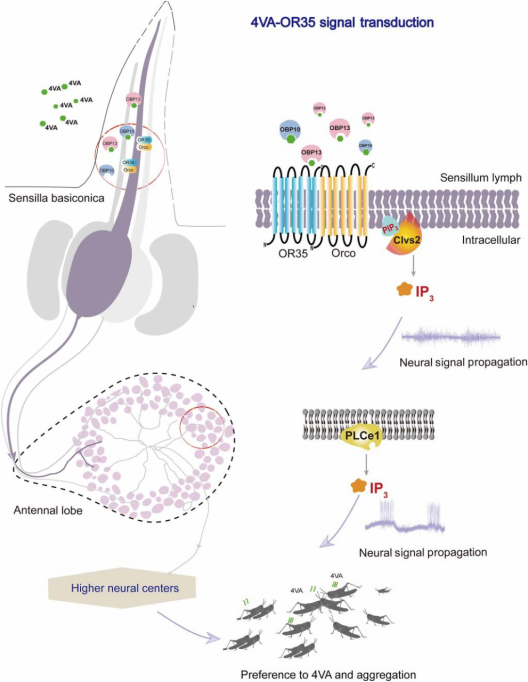
Locusts adopt IP3 as a second messenger for olfactory signal transduction
1. Achievement TitleLocusts adopt IP3 as a second messenger for olfactory signal transduction2. Achievement SummaryFor the first time experimentally demonstrated that insect olfactory signal transduction does not rely on GPCR, with IP3 serving as the second messenger.3. Research Team and Detailed Achievement DescriptionOn September 11, 2025, the Kang Le team published their latest research find...
-
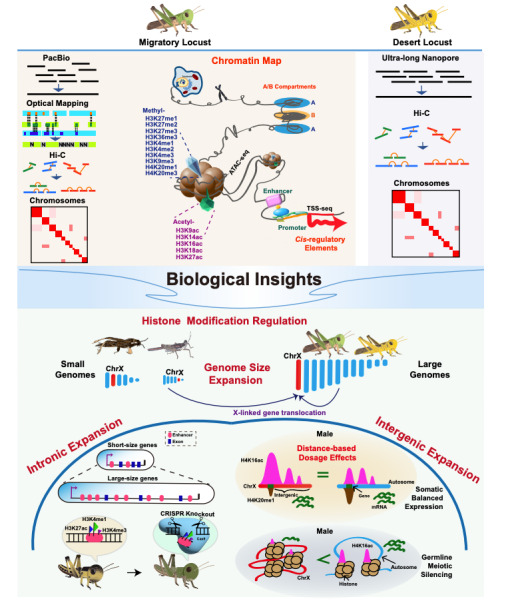
Chromatin dynamics of a large-sized genome provides insights into polyphenism and X0 dosage compensation of locusts
1. Achievement TitleChromatin dynamics of a large-sized genome provides insights into polyphenism and X0 dosage compensation of locusts2. Achievement SummarySystematically elucidated the complex regulatory mechanisms of chromatin modifications on gene expression within a giant genome, inaugurating a new era in locust ENCODE research.3. Research Team and Detailed Achievement DescriptionOn Septem...
-
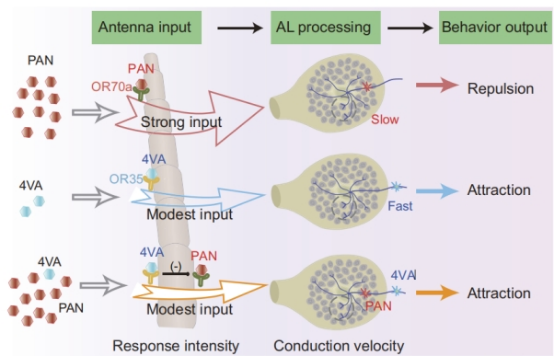
Locusts employ neuronal sensory prioritization to reconcile two conflicting olfactory signals while aggregating
1. Achievement TitleLocusts employ neuronal sensory prioritization to reconcile two conflicting olfactory signals while aggregating2. Achievement SummaryRevealed how migratory locusts achieve a balance between group aggregation, predator defense, and avoidance of intraspecific cannibalism through exquisite tuning of two functionally opposing chemical signals, 4VA and PAN, during the gregarious ...
-
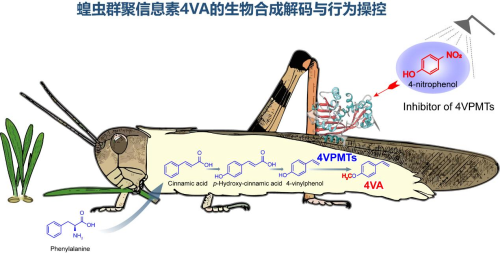
Decoding 4-vinylanisole biosynthesis and pivotal enzymes in locusts
1. Achievement TitleDecoding 4-vinylanisole biosynthesis and pivotal enzymes in locusts2. Achievement SummaryFirst systematic elucidation of the biosynthetic pathway of the locust aggregation pheromone 4-Vinylanisole (4VA), identification of key enzymes, and development of small-molecule inhibitors, enabling precise regulation of locust aggregation behavior and opening a new path for green pest...
-
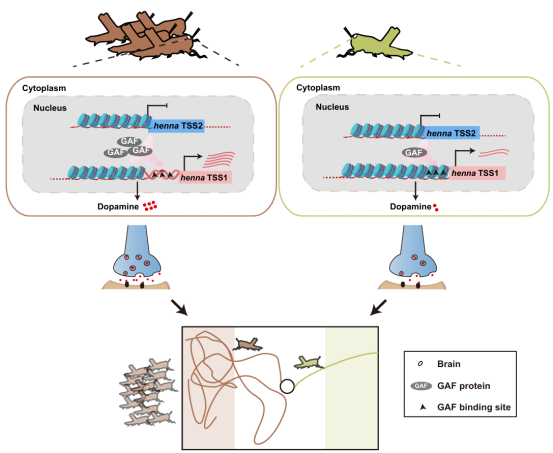
GAF-dependent Chromatin Plasticity Determines Promoter Usage to Mediate Locust Gregarious Behavior
1. Achievement TitleGAF-dependent Chromatin Plasticity Determines Promoter Usage to Mediate Locust Gregarious Behavior.2. Achievement SummaryTranscription factor GAF cooperates with multiple binding sites to regulate chromatin accessibility and select promoter transcription, thereby determining gregarious behavior in migratory locusts3. Research Team and Detailed Achievement DescriptionOn April...


No. 1 Gongchang Road, Guangming District, Shenzhen City
0755 8880 2352
icgt@suat-sz.edu.cn
Shenzhen University Of Technology Guangdong Icp No. 2021148220